

Classification : News HotspotsDate:2026-03-19Browse : 4988
Hello everyone! After listening to the Premier's government work report, I was deeply motivated and uplifted. The report is pragmatism and inspiring. It proposed “ promoting the cultivation of outstanding engineers, national-level craftsman, and highly skilled personnel”, a sentiment I fully endorse. As a representative of skilled personnel, I would like to share a few insights and suggestions based on my 30-year growth journey in Himile and the company's talent practices.

Firstly, enterprises are ideal platforms for cultivating, achieving and leveraging talents.
“No excellent employees, no excellent enterprise.”
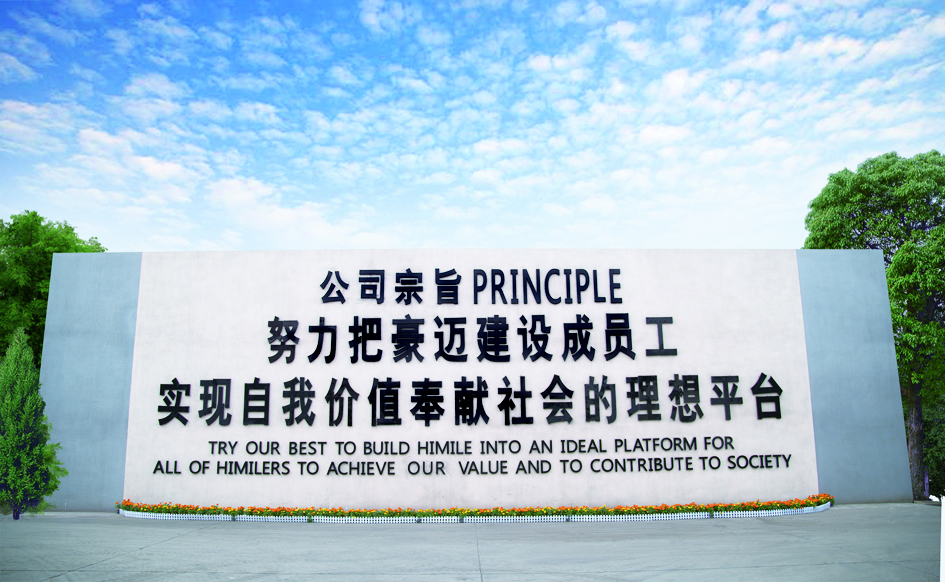
“Try our best to build Himile into an ideal platform for employees to achieve self-value and contribute to society”is the mission that Himile Company has been putting into practice for over 30 years
Across the company, whether it is in production technology or management, we must always stay vigilant in peacetime and keep pace with the times in order to remain invincible in the fierce market competition.
In line with the principle of “Learn what you need in job, improve what you are lack of, internalize what is required in job”,employees in different positions should be proactive and motivated.
To this end, the company has established various platforms and systems for talent cultivation, including training, compensation, and recognition, to ensure that over 30,000 employees receive skill training and achieve growth and development. It has supported the steady development of over a dozen distinct projects of Himile.
Secondly, through an advanced equity-sharing mechanism, various outstanding talents can participate in the distribution of the enterprise results, achieving co-creation, sharing, and risk-sharing.
Aiming to help employees feel secure,valued and fulfilled, Himile has long been committed to building "a community of interests, a community of careers and a community of spirit" for a long time. Since 2000, lots of key outstanding employees has become shareholders of Himile. Up to now, it has cultivated a large number of ordinary employees worth millions.
I am one of the beneficiaries, and a typical representative of Himile employees as well. As a migrant worker who started working as a factory apprentice after graduating from middle school, I am now a member of the company's board of directors, and have achieved financial freedom like many other shareholders — It is precisely because of this “co-creation and sharing” mechanism that all of our employees have achieved common prosperity, providing Himile practical example for the country’s pursuit of common prosperity.
In Himile, “Anyone capable at their job are talents, everyone could be a talent, everyone can fully display their talents.” Our favorable cultural atmosphere and advanced incentive mechanisms unite a large number of outstanding talents with low educational qualifications and colleagues with high educational qualifications. We stand together and give it our all, successfully accomplish five projects and become invisible champion, and tire molds business is leading in the global market.
Proved by Himile’s practice, the successful implementation of the talent mechanism has not only made the enterprise, but has also provided a way for the majority of employees to grow, and achieve common prosperity.To promote more enterprises to achieve high-quality development driven by talents, as has been done by Himile, further government support is needed for relative policies.I would like to put forward two suggestions based on our company's practice.
First, accelerating the implementation of special work-related retirement policies for private enterprises. Currently, the government has successively introduced policies such as the Private Economy Promotion Law, aiming to promote equal rights for both private enterprises and state-owned enterprises. However, in the relevant documents issued in 1978, only state-owned enterprise employees were entitled to special work-related retirement, while private enterprises were not eligible for such policies. It is recommended to revise the outdated 1978 regulations and include employees in special types of work in private enterprises within the scope of the retirement policy. The legacy problems and the current problems of determining the length of service for special job-related workers should be addressed properly.
Second, deepen the reform of enterprises held by an employee stock ownership association. In the early 1990s, the employee stock ownership association model formed during enterprise restructuring played a positive role in promoting shareholding system reforms, employees rights safeguarding , and social stability. However, due to subsequent policy adjustments, non-listed enterprises cannot have more than 50 shareholders. An employee stock ownership association needs to be established if there are more than 50 shareholders.Nevertheless, the legal status of employee stock ownership associations is lacking, which leads to the illegality of enterprise shareholder qualifications and unclear equity relationships, making it difficult to protect the equity rights of employees and the legality of the enterprise's equity system. It is suggested that relevant national departments issue guidelines to make employee stock ownership associations legal, and to protect the legitimate rights and interests of enterprises and employees.

Official Account

video

Recruitment
网页版权所有:豪迈集团股份有限公司 © 2023 Himile Group Co.,Ltd 鲁ICP备12027180号 鲁公网安备37078502370929号
Employee complaints:13864673866/13864673866@163.com|Email login|Human Resources:0536-2361016 / 13806360005

